

|
Boost pressure control plays a crucial role in optimizing engine performance and fuel efficiency in modern automotive turbocharger systems. Understanding this system is essential for maintaining your vehicle's health and performance. In this comprehensive guide, we will delve into the intricacies of boost pressure control in the automotive world. Component Overview
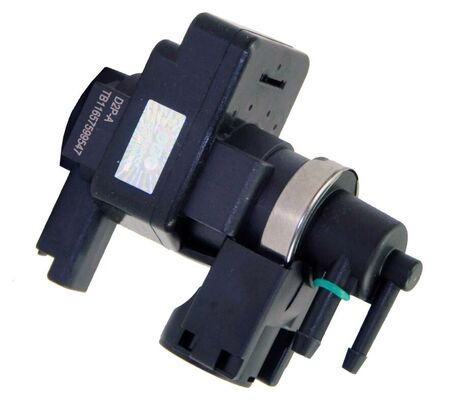
Boost pressure control is a sophisticated system consisting of several key components: Turbocharger with Variable Turbine Geometry The turbocharger is the heart of the system and features variable turbine geometry. Unlike conventional wastegate-controlled systems, it controls the boost pressure with adjustable guide vanes mounted around the turbine wheel. These vanes influence the force exerted by exhaust gases on the turbine, allowing precise control of the desired boost pressure. Electric Boost Pressure Actuator The electric boost pressure actuator is responsible for controlling the adjustment lever on the turbine housing. It includes an electric motor with a worm gear and control electronics. The actuator is directly connected to the turbocharger, making it an integral part of the system. How It Functions The boost pressure control system is orchestrated by the Digital Diesel Electronics (DDE) control unit. It sends a pulse-width modulated signal (PWM signal) to the electric boost pressure controller, which converts it into an adjustment angle to control the servomotor. The controller is not only a precise regulator but also self-diagnostic, capable of reporting errors to the DDE. Testing the Variable Turbine Geometry Proper control of the boost pressure is crucial for engine efficiency. To ensure correct operation, the adjustment lever should be swiftly moved between a rotation angle of 35° to 45%. The system continuously monitors for errors, including control deviations, actuator issues, blockages, and disconnected charge air hoses. Consequences of Errors in Boost Pressure Control When errors occur in the boost pressure control system, several consequences may arise:
Errors in other engine components, such as exhaust gas recirculation control, boost pressure sensor, or various sensors like the crankshaft sensor, accelerator pedal module, mass airflow sensor, terminal 15, and wake-up signal, can also trigger boost pressure control shutdown. Boost Pressure Sensor The boost pressure sensor measures the absolute pressure in the charge air duct, acting as a crucial sensor for boost pressure control. If a defect is detected in this sensor, the consequences include turning off boost pressure control and exhaust gas recirculation. Charge Air Temperature Sensor The charge air temperature sensor, located between the charge air cooler and the throttle valve, measures the temperature of compressed air. If this sensor is faulty, it leads to the deactivation of boost pressure control, exhaust gas recirculation, and limitations in injection quantity. Boost pressure control is a fundamental aspect of turbocharger systems in modern automobiles, ensuring optimal engine performance and efficiency. Understanding its components, functions, and potential consequences of errors is essential for automotive enthusiasts and technicians alike. For more in-depth automotive knowledge and training, we recommend the best BMW Programming & Coding Course. Note: Keep in mind that automotive technology evolves, and technical changes may occur. Always stay updated for the best performance and maintenance practices.
1 Comment
Sophia Martinez
1/10/2024 10:43:57 am
Electronic Repair’s blog is a great resource for anyone wanting to learn more about cars. It’s full of practical tips and insights I can trust
Reply
Your comment will be posted after it is approved.
Leave a Reply. |
0%
Auto Tuning Blog “The content provided is for educational and informational purposes only.” Categories
All
|